The Short Answer: Hocking Hills Fall Foliage Peaks October 12–25
Most years, that’s your window. The sugar maples go crimson first, the birches follow with yellow, and the oaks bring up the rear with bronze and rust. The gorges take a bit longer than the ridges — by the time Old Man’s Cave canyon walls are fully orange, Conkle’s Hollow rim has already been at peak for a week.
What actually drives the timing: warm sunny days plus cold nights. That temperature swing is what pulls the chlorophyll out and lets the underlying pigments show. A hot, dry summer usually pushes peak later by a week. A cool, wet summer can move it earlier, sometimes into early October.
Here is the full picture This guide covers the full picture — week by week from late September through November, gorge vs. ridge differences, what each major trail looks like in fall, and what affects color quality year to year.mdash; week by week from late September through November, how gorge and ridge timing differs, what each major trail looks like in fall, and what actually affects color quality from year to year.
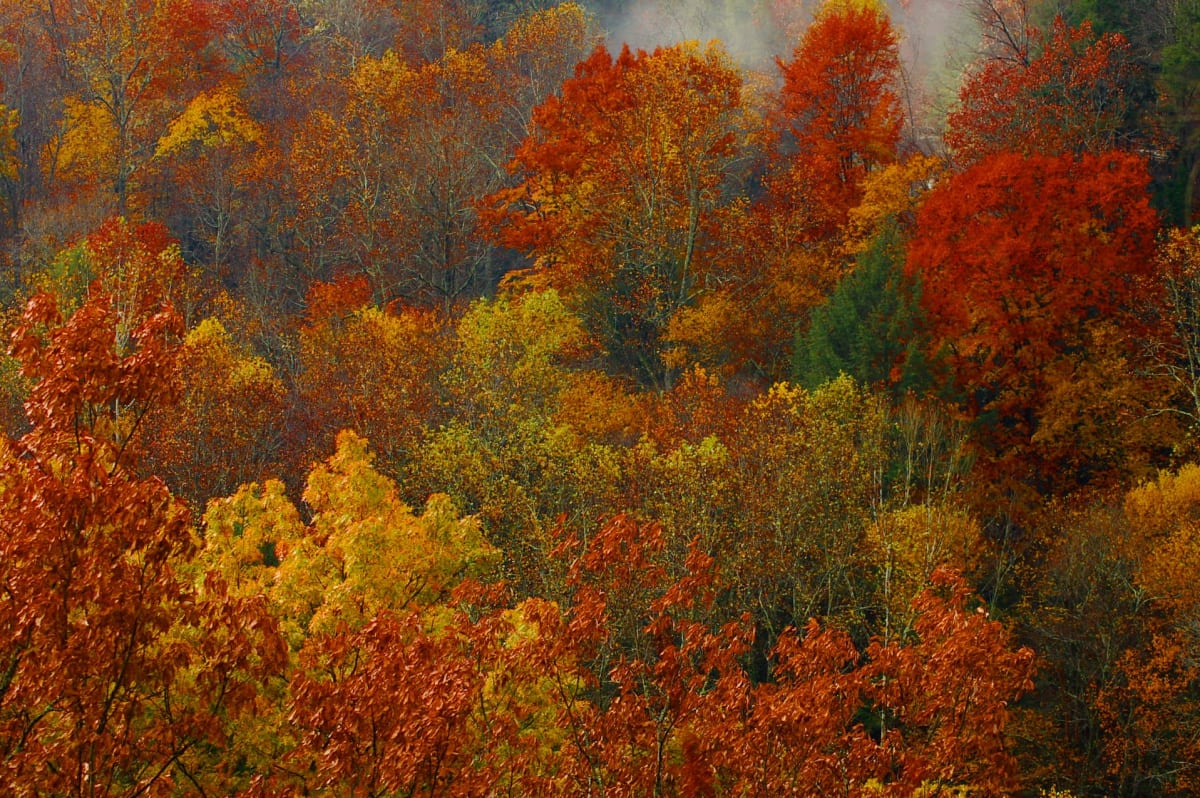
Hocking Hills Fall Foliage — Week by Week
Quick Reference
- Late September: Color starting on ridge edges and sourwood shrubs. Gorges still mostly green.
- Early October (1–11): Maples going red on open ridges. Gorges turning. Good, not peak.
- Mid-October (12–25): Peak window. Ridges first, gorges follow. Most crowded period of the year.
- Late October (26–31): Oaks still holding. Gorges may still have color. Crowds drop. Rates soften.
- Early November: Mostly bare. Some oaks hanging on. Waterfalls run harder. Quiet.
Late September — Color Starting
The first color shows on south-facing slopes and ridge edges, where trees get the most sun. Sourwood shrubs on gorge walls turn deep red as early as mid-September. The maples are still green in the gorges but starting to turn on the exposed ridges. Worth seeing if you happen to be there, but don’t plan a trip specifically for foliage yet.
Early October (Oct 1–11) — Building Fast
Sugar maples on the open ridges go from green to orange to red in about two weeks. By October 8–10, the Conkle’s Hollow rim trail can be at or near peak while the gorge floor below is still mostly green. Cedar Falls surroundings start turning. A good time to visit — some color on every trail, fewer crowds than mid-October.
Mid-October (Oct 12–25) — Peak Window
This is it. The gorges catch up to the ridges and for about 10 days everything is color — canyon walls orange, birches yellow above the sandstone, oaks going bronze on the upper slopes. Old Man’s Cave is at its most dramatic. Ash Cave framing is at its best. Cedar Falls runs through a corridor of color.
This is also when parking lots fill by 9am on weekends. Plan early arrivals or go on a weekday.
Late October (Oct 26–31) — Underrated
The maples are mostly done by now but the oaks hold on. The gorges may still have color in the lower sections where it’s more protected. Crowds drop significantly after the 25th. If peak foliage isn’t your only goal, late October is worth considering — the trails feel completely different with the canopy thinning and more light getting through to the gorge floors.
Early November — Bare but Beautiful
Most trees are bare by the first week of November. What you gain: the gorge geology becomes fully visible without leaf cover, waterfalls run harder after fall rains, and the trails are nearly empty. Rock House and Cantwell Cliffs are particularly good in this stripped-back state — the rock formations stand out when there’s nothing competing with them.
Gorge vs. Ridge: How the Timing Differs
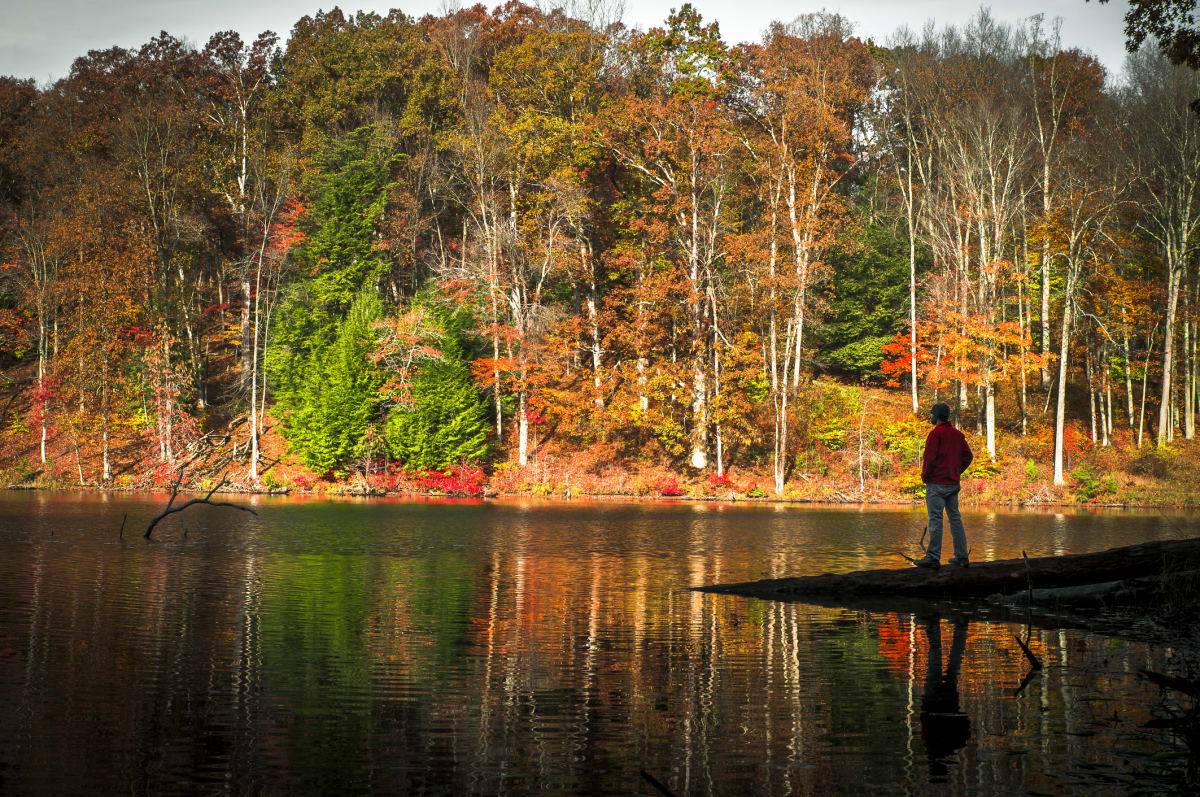
This is the part most visitors don’t realize: the ridges and the gorges in Hocking Hills peak at different times, sometimes by a full week.
Ridges peak first (roughly Oct 10–18). Open canopy, more sun exposure, faster temperature swings. Conkle’s Hollow rim trail, Cantwell Cliffs, and Rock House all benefit from being exposed. From the rim at Conkle’s Hollow you’re looking down into a gorge that’s still turning while the ridge around you is at full color.
Gorges peak later (roughly Oct 15–25). Shaded, moist, more protected from wind. Old Man’s Cave gorge, Ash Cave, and the Cedar Falls trail corridor hold color longer. The canyon walls don’t turn — the sandstone stays orange-tan year-round — but the maples and birches above and along the rim reflect color down into the gorge. On a bright day in mid-to-late October, standing in the lower gorge at Old Man’s Cave and looking up is one of the better views in Ohio.
Bottom line: if you’re visiting October 10–15, lead with the ridge trails and finish in a gorge. If you’re visiting October 18–25, the gorges will be at their best and the ridges may have passed peak but will still have oak color.
What Affects Color Quality Year to Year
| Condition | Effect on Fall Color |
|---|---|
| Warm days + cold nights | Best reds and oranges. The temperature swing drives anthocyanin production in maples. |
| Drought summer | Early leaf drop, dull colors. Trees stressed by drought skip the vivid phase and go straight to brown. |
| Wet summer | Generally good for color. Trees well-hydrated going into fall tend to produce more vivid displays. |
| Warm October | Peak delayed by 1–2 weeks. Color is still good but the window compresses. |
| Early frost | Can produce a brief vivid peak followed by rapid leaf drop. The window gets shorter. |
| High winds during peak | Can strip leaves before you get there. Best to visit right after a calm week. |
Fall Foliage by Trail Fall Foliage by Trail — What to Expect Where
mdash; What to Expect Where
Here is what each of the seven main trails delivers during fall. For trail distances, difficulty ratings, and a ranked list by color payoff and crowd level, see the full fall hiking guide.
Old Man’s Cave
The most-visited trail in Hocking Hills is also one of the best for fall color. The upper gorge trail puts you at eye level with the maple canopy as it turns. The lower gorge — below the main waterfall — is shaded and holds color into late October. The recess cave itself frames the gorge colors in a way that makes for dramatic photos. Go early on weekends; the parking lot fills fast.
Ash Cave
Ash Cave is the largest recess cave in Ohio and fall is the best time to see it. The maple canopy above the 90-foot rim turns first, framing the cave opening in red and orange. The paved accessible trail from the upper parking lot is 0.25 miles. The longer lower trail adds about a mile through fall woods. Quieter than Old Man’s Cave on most days.
Cedar Falls
The waterfall at Cedar Falls runs through a corridor of hardwoods that turn together in mid-October. After a rainy week the falls run loud; after a dry stretch they’re lighter but the color around them is the same. The 2.5-mile round trip trail connects to Old Man’s Cave for those who want to link both in one morning.
Conkle’s Hollow
The rim trail at Conkle’s Hollow is the best ridge-level fall foliage hike in the park. The narrow gorge below is one of the deepest in Ohio, and in early-to-mid October the rim trail puts you at canopy level looking down into a gorge that’s still turning. The gorge floor trail is accessible and flat — very different experience, also good in fall.
Cantwell Cliffs
Less visited than the main park trails. The cliffs rise about 150 feet through hardwood forest that turns well in October. The “Fat Woman’s Squeeze” passage through the rocks is tighter in fall layers — plan accordingly. Good option if you want fall color without the Old Man’s Cave parking situation.
Rock House
The only true cave in the Ohio state parks system. The trail to Rock House runs through oak and maple forest that turns in mid-to-late October. The cave windows — openings in the rock face — frame fall color outside like a photograph. Best visited after the main gorge trails have peaked, when the oaks are still holding color.
Lake Hope State Park (Southern Region)
Twenty minutes from the main Hocking Hills State Park trails, Lake Hope is surrounded by the Wayne National Forest and gets far less traffic during fall. The lake reflects fall color from the hills above. The hiking trails through second-growth forest hit peak roughly the same time as the main park. A good half-day add-on for those staying in the Southern Region.
Are the Waterfalls Good During Fall Foliage?
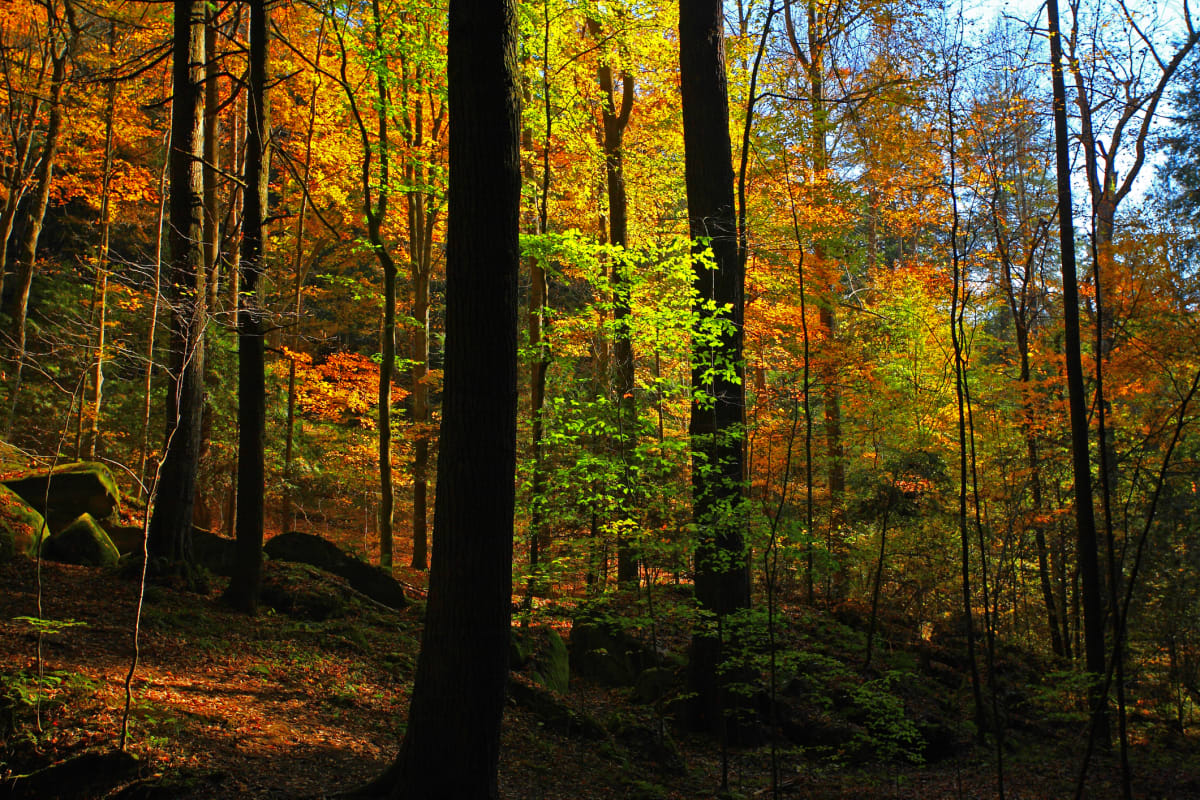
It depends on how much rain fell in September and early October. Hocking Hills waterfalls are fed by groundwater seeps and seasonal runoff — they don’t have a consistent source year-round.
After a wet September, Cedar Falls and the Old Man’s Cave main falls can be impressive in October. After a dry stretch, flow is lighter but still present. The waterfalls are rarely completely dry in October — fall rains usually arrive by mid-month.
What October gives you that summer doesn’t: the combination of running water and fall color simultaneously. The gorge at Old Man’s Cave with the creek running, the canyon walls going orange, and the maple canopy above — that combination only exists for about two weeks a year.
Hocking Hills Fall Foliage — Frequently Asked Questions
When does fall foliage peak in Hocking Hills?
Most years, October 12–25. The ridges peak first around October 10–15. The gorges follow, peaking around October 15–25. A warm October can push the window to late October. A cool summer can pull it into early October. The third week of October is the safest bet if you’re planning ahead.
What trees turn color in Hocking Hills?
Sugar maples produce the most vivid reds and oranges and turn first, usually mid-October. Birches follow with yellow. Oaks go last — rust and bronze — and hold their leaves longest, sometimes into early November. Sourwood shrubs on the gorge slopes turn deep red as early as late September. Hemlock and rhododendron stay green.
Is fall foliage better at the gorges or ridges?
Both are worth seeing but peak at different times. Ridges (Conkle’s Hollow rim, Cantwell Cliffs) peak first around October 10–15 and give wide canopy views. Gorges (Old Man’s Cave, Ash Cave) peak later around October 15–25 and give dramatic color on sandstone walls. If you can only pick one, the gorges are more iconic. If you can do both, hike a ridge in the morning and a gorge in the afternoon.
How crowded is Hocking Hills during fall foliage?
Peak foliage weekends are the most crowded days of the year — Old Man’s Cave parking fills before 9am. Weekdays during the same period are dramatically quieter. If your schedule allows it, Tuesday through Thursday during peak week gives you the same scenery with a fraction of the people.
Does fall color happen every year in Hocking Hills?
Every year, yes — but intensity varies. The best displays come after a summer with adequate rain and falls with warm days and cold nights. Drought years or unusually warm Octobers produce duller color or early leaf drop. The gorges tend to be more consistent than exposed ridges because the shaded, moist environment protects the leaves longer.
What is the weather like during fall foliage season in Hocking Hills?
Early October averages 60–65°F during the day, 40–45°F at night. By late October, highs drop to the upper 40s and lows can hit the low 30s. Rain is common in October — bring a light waterproof layer. Trail surfaces are wet leaves over sandstone, which is slippery. Waterproof footwear makes a real difference.