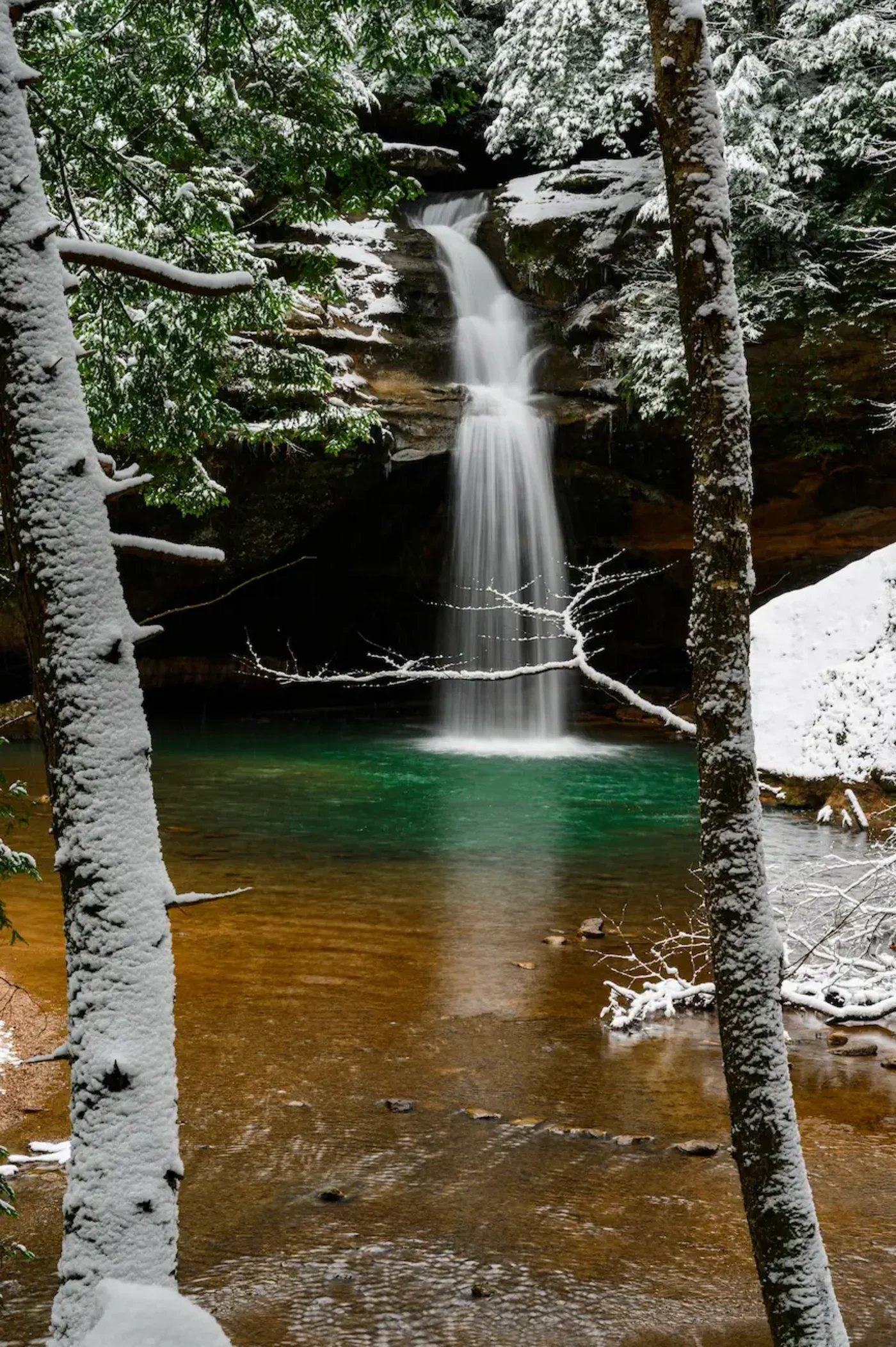
March is Hocking Hills' true transition month, and its best-kept secret for waterfall photography. Snowmelt and spring rain typically push waterfall flow to its highest point of the year, so if you want to see Ash Cave or Old Man's Cave running big, this is the month. The trade-off is mud season: trails get slick, the weather swings wildly from warm to wintry in a single week, and there's no reliable "typical" March day. Come for the water, and plan loosely.
March in Hocking Hills — At a Glance
| Good time to visit? | Yes for waterfall photography, harder to plan around otherwise — expect mud and unpredictable weather |
| Typical weather | Highly variable — early month can feel like winter (40s°F highs, below-freezing lows), late month can reach the upper 50s–low 60s°F |
| Seasonal conditions | Waterfalls at peak flow from snowmelt and spring rain; mud season underway; occasional lingering ice in shaded gorges early in the month |
| Crowds | Light — typically one of the quieter months of the year |
| Hiking | Often slippery and muddy — stone steps and inclines near the falls need extra caution |
| What to pack | Waterproof boots with real tread, layers, a waterproof outer shell |
| March is particularly good for | Big, dramatic waterfall photos and quiet trails — not for guaranteed weather or easy footing |
What Hocking Hills Is Like in March
March doesn't commit to a season. It can open with a genuine winter week — cold, gray, maybe a last dusting of snow — and close with a 60°F afternoon that feels like May. That volatility is the defining fact of the month: there's no single "March in Hocking Hills" experience, and the forecast a week out isn't worth trusting.
What is consistent is water. Snowpack melts, the ground is already saturated, and spring rain adds to it, so the region's waterfalls typically run at their fullest and most dramatic of the entire year. That's a real draw for photographers and anyone who's only ever seen the falls at their thin late-summer trickle. The cost is underfoot: dirt trails turn to mud, the stone steps near the gorges get slick, and footing takes more attention than it does in drier months.
It's also genuinely quiet. Winter-break traffic is over, spring-break and April crowds haven't started, and the unpredictable weather keeps casual day-trippers away. If you don't mind planning loosely and packing for both extremes, March rewards you with empty trails and the year's best water.
Weather & What to Pack in March
Average Temperatures
- Early March highs: typically in the low-to-mid 40s°F
- Early March lows: often below freezing overnight
- Late March highs: can reach the upper 50s to low 60s°F
- Late March lows: typically upper 30s°F, though a cold snap can drop well below that
- Day-to-day swings of 20–30°F are common — check the forecast for your specific travel dates, not just the monthly averages.
What to Pack
- Waterproof hiking boots with real tread — this is the muddiest, slickest month of the year on the trails
- Layers you can add or remove through the day, including a warm mid-layer for cold snaps
- A waterproof outer shell — rain and wet snow are both possible
- Trekking poles, if you have them, for muddy inclines and stone steps near the waterfalls
- Traction devices for boots (microspikes) if visiting early in the month, in case of lingering ice in shaded gorge sections
Seasonal Conditions in March
Waterfall flow is the headline this month. Snowmelt combines with typically wetter spring weather to push the region's waterfalls — Ash Cave, Old Man's Cave, Cedar Falls, Conkles Hollow — to their highest flow of the year, well beyond what you'll see by summer. If dramatic, powerful waterfall photos are the goal, March beats every other month.
Mud is the trade-off. Saturated ground plus regular rain means dirt sections of trail get soft and slick, and the stone steps near the gorges — already uneven — get slippery when wet. Move slower than you would in drier months and expect muddy boots more often than not, even when the forecast looks dry.
Ice is a smaller but real risk early in the month, particularly in shaded gorge bottoms that hold onto cold longer than open ridgetops. By late March this mostly clears, but it's worth checking conditions if you're visiting in the first half of the month. Note that this is not yet a wildflower month — the forest floor is still bare in March, and that show doesn't start until April.
Where to Explore in March
Old Man's Cave
Old Man's Cave is the clearest showcase for March's peak waterfall flow — the Upper Falls and the gorge below run fuller and louder than at almost any other time of year. It's also one of the best-known trails for slippery footing when wet, so this is exactly the month to take the steps slowly and stick to your traction. See the full Old Man's Cave trail guide for route options, parking, and timing.
Ash Cave
Ash Cave's paved, gently sloped trail makes it one of the easier picks during mud season, and its horseshoe-shaped waterfall is genuinely more impressive with the extra March flow. It's a good option if you want the high-water payoff without the trickiest footing. See the full Ash Cave trail guide for accessibility and parking details.
March 2027 Events
Maple Sugaring in the Hills
A live demonstration of how tree sap becomes maple syrup, with a local producer selling syrup on-site. Free. The 2026 program ran March 14–15, 11 AM–3 PM; the exact 2027 dates hadn't been published at the time of writing, since maple sugaring programs shift with that year's sap flow. Check the park's Facebook page or call 1-800-HOCKING closer to your trip.
Plan your arrival
Our family tip: download your map before you go. Cell reception can be unreliable in Hocking Hills. We learned this the hard way: download an offline Google map while you still have Wi-Fi or a cell signal. Download an area that covers your whole drive, including the way back to where you are staying, and wait for the download to finish. Simply saving a place or opening directions is not the same as downloading an offline map. How to download a Google map for offline use. Offline maps support driving directions within the downloaded area; live traffic and walking directions are unavailable offline. Before leaving, save the official Hocking Hills park and trail map for offline use. For trails outside this map, use the relevant preserve or park map.
Before setting out, check the National Weather Service forecast for South Bloomingville and ODNR park information and notices. Weather and trail conditions can change; check posted notices at your destination too.
Choose a stop covered in this guide to open Google Maps. Select your current location or enter a starting address to see driving directions and an estimated travel time.
- Ash Cave — directions and estimated drive time
- Conkle’s Hollow — directions and estimated drive time
- Old Man’s Cave — directions and estimated drive time
Drive times vary with traffic and road conditions. Follow signs for designated visitor parking on arrival; a map route does not confirm that a trail is open or accessible.
March FAQ
Is March a good time to visit Hocking Hills?
It depends what you're after. March is arguably the best month of the year for dramatic waterfall photos, but one of the harder months to plan around for reliable weather or dry trails. Come for the water, and pack for anything.
Are the waterfalls good in Hocking Hills in March?
Yes — often the best of the year. Snowmelt combined with spring rain typically pushes flow to its highest point of the year, making March the top month for dramatic waterfall photography.
What is the weather like in Hocking Hills in March?
Highly variable. Early March can still feel like winter (40s°F highs, below-freezing lows), while late-month afternoons can reach the upper 50s or low 60s°F. A 60°F day can be followed by snow within 48 hours, so check the forecast right up until your trip.
Are trails muddy in Hocking Hills in March?
Yes, this is peak mud season. Footing is toughest on the stone steps and inclines near the waterfalls, so waterproof boots with real tread are worth it this month more than any other.
Is Hocking Hills crowded in March?
Generally not — March is typically one of the quieter months. It falls between winter and spring break traffic, and unpredictable weather keeps casual visitors away.
What should I pack for Hocking Hills in March?
Layers you can add and remove, a waterproof outer layer, and waterproof hiking boots with good tread for mud and possible icy patches. Pack for both a 60°F afternoon and a cold, wet one — March doesn't commit to either.
Continue Planning Your Hocking Hills Trip
For the full trip-planning picture — every major trail, itineraries, and where to stay — see the Complete Guide to Visiting Hocking Hills. Given how unpredictable March weather can be, it's worth keeping our rainy day guide handy as a backup plan in case a wet or wintry stretch changes your trip.
Planning a March Trip?
Pool House Lodge is a 7-bedroom Hocking Hills cabin for groups of up to 20, with a private indoor pool and 22 wooded acres.
Check AvailabilityOriginally published .